
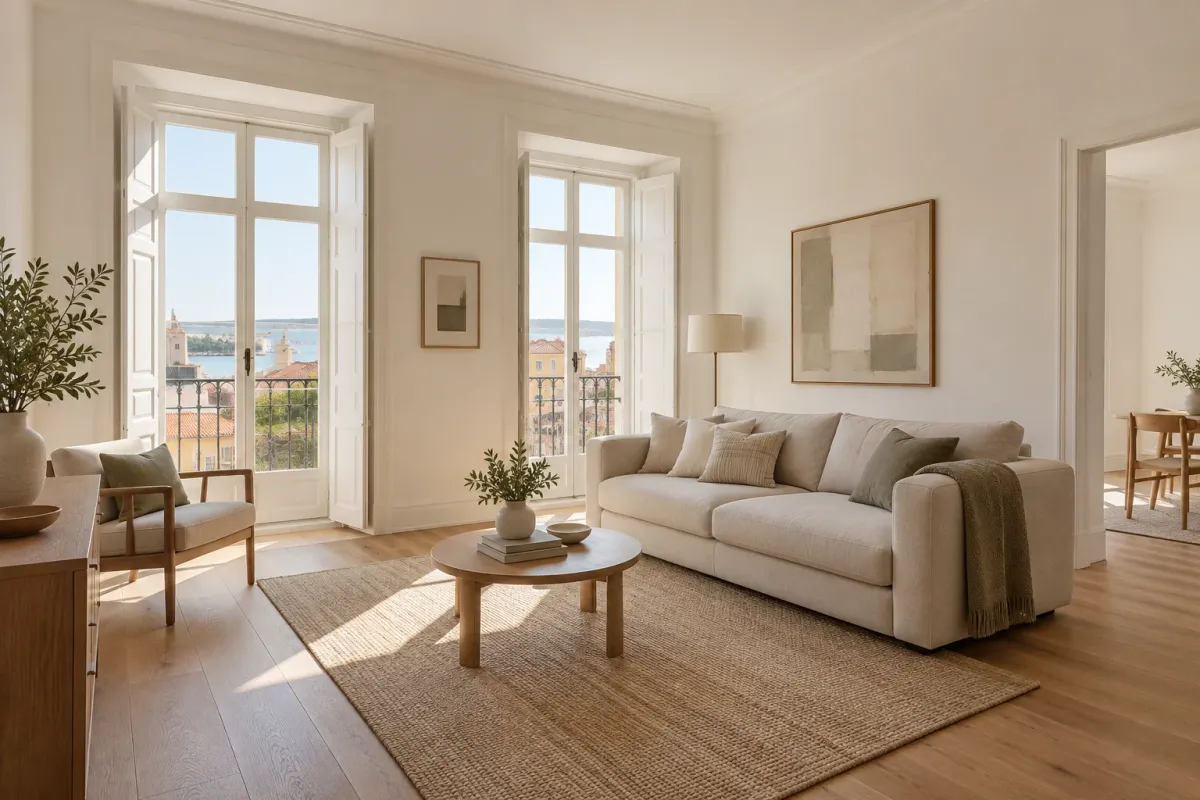
1. Make a room-by-room list
For each living room, bedroom, hallway or kitchen, note whether you want the walls, ceiling or both painted. List doors, skirting boards, cupboards and other elements separately. “Repaint the whole house” can be interpreted in several ways; a list prevents two quotations from covering different work.
Give the town and the property’s use: main home, holiday house or apartment being prepared for rental. This helps organise access and availability. The interior painting service for Aveiro, Ílhavo and Vagos sets out the points to confirm during assessment.
Take care of interior edges and protection
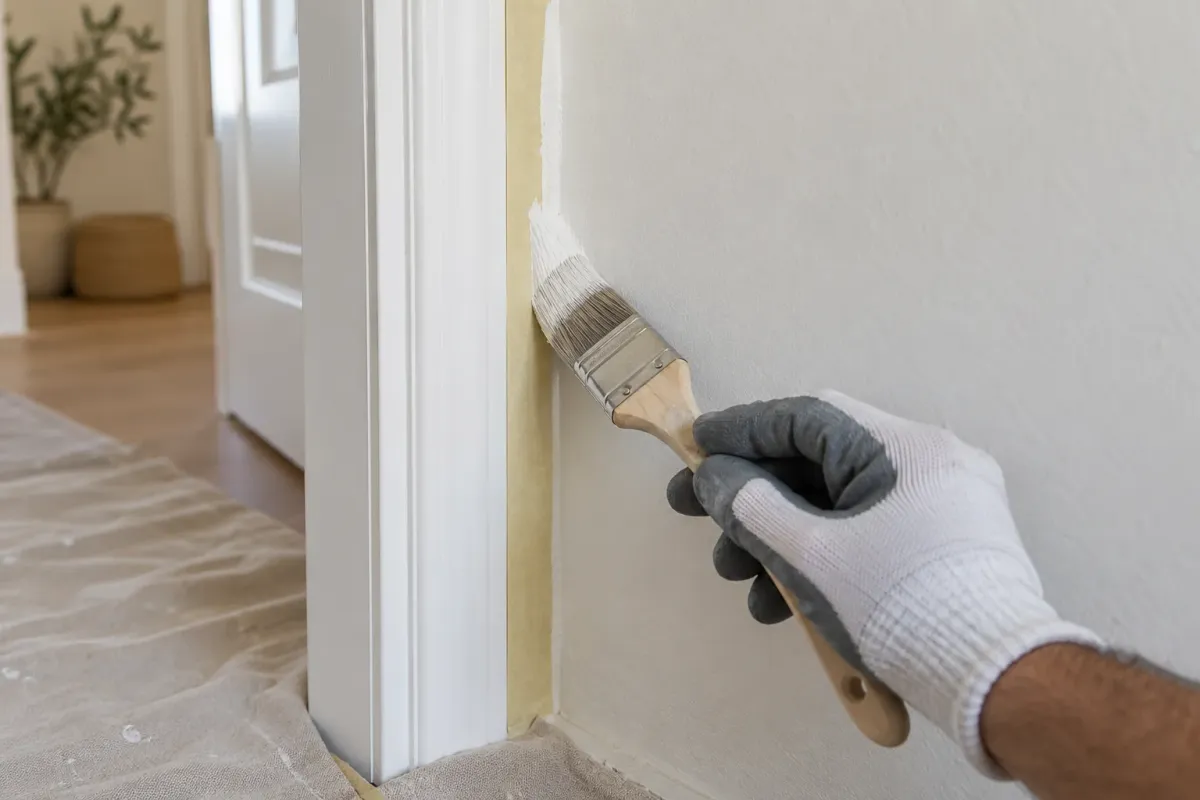
The brush follows a taped surround, with protection laid on the floor. The practical example focuses on these edges and on organising the surfaces to paint before the room is brought back into use.
How to approach this situation
- Have small holes, loose coatings and recurring stains identified. Moisture with an unexplained cause needs assessment first.
- Allow for floor and furniture protection, agreed moves and necessary repairs before painting.
- Approve the colour on site and specify the product, finish, application conditions and room reuse requirements from the documentation.
What determines the decision
An attractive finish depends on preparation and how the room is used. Choosing matt or satin alone does not define resistance to cleaning.
What to check at the end
Review the finish in the room’s lighting, check junctions and keep the colour reference. Doors, skirting boards and ceilings are included only when the quotation says so.
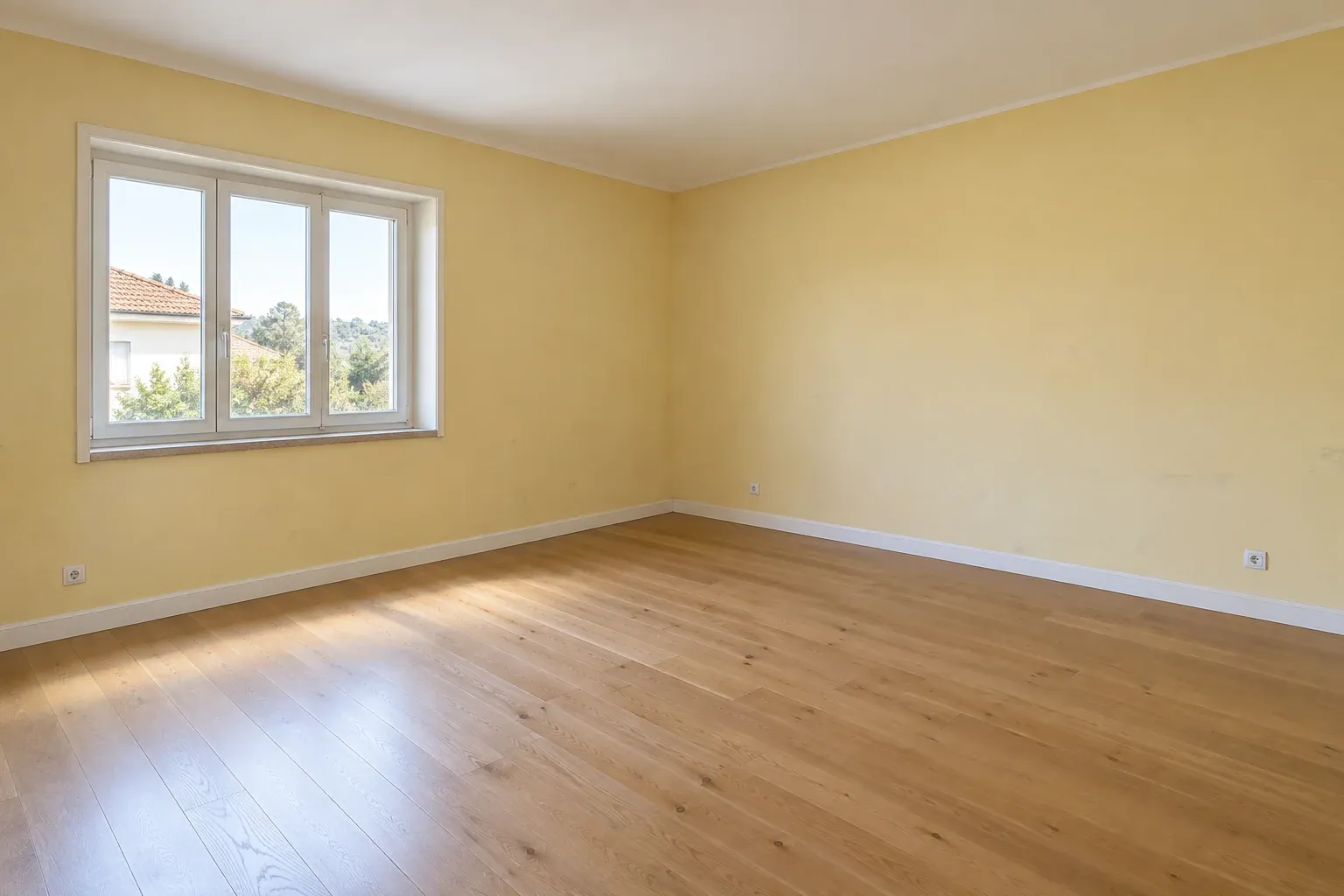
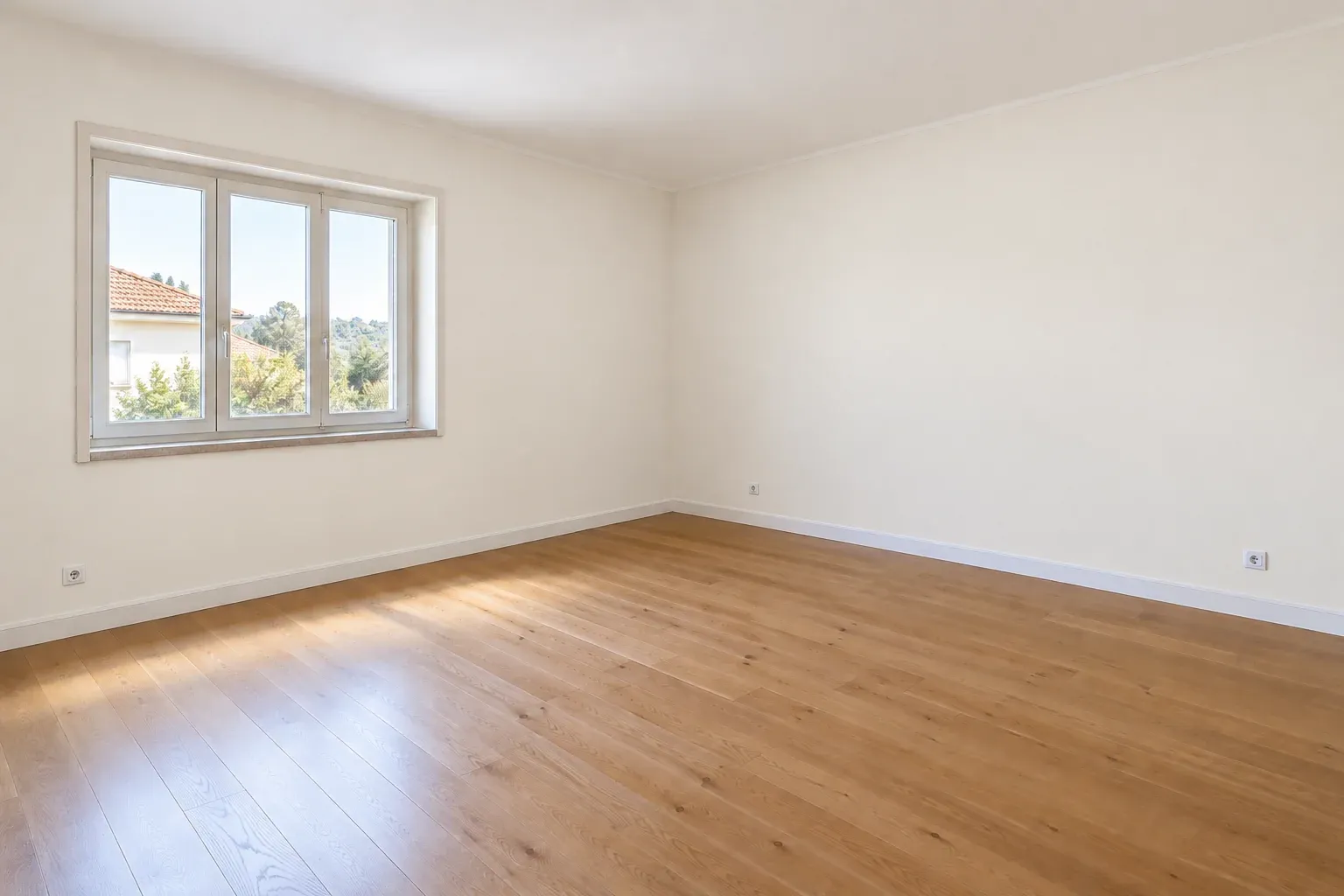
The same room. A lighter feel.
2. Record the condition before choosing the paint
Photograph an overall view and areas needing attention: fixing holes, loose paint, old repairs and stains. Describe what has changed and whether a mark returned after previous work. You do not need to make a technical diagnosis to prepare your enquiry.
Minor repairs may form part of the agreed preparation. Changing cracks or persistent staining require their own assessment. Avoid commissioning paint as a remedy for unexplained moisture. The repair scope should be explicit and within the competence of the person carrying it out.
3. Agree protection of the home and furniture
Define who moves furniture, removes fragile objects and clears the walls. Confirm protection of floors, windows and elements staying in place. Include daily tidying and final cleaning in the discussion, especially in an occupied home.
Identify rooms that must remain available before the quotation. A phased project needs working space and a route through the property. Do not assume every surface can be painted without affecting how the home is used.
4. Choose colour and finish on site
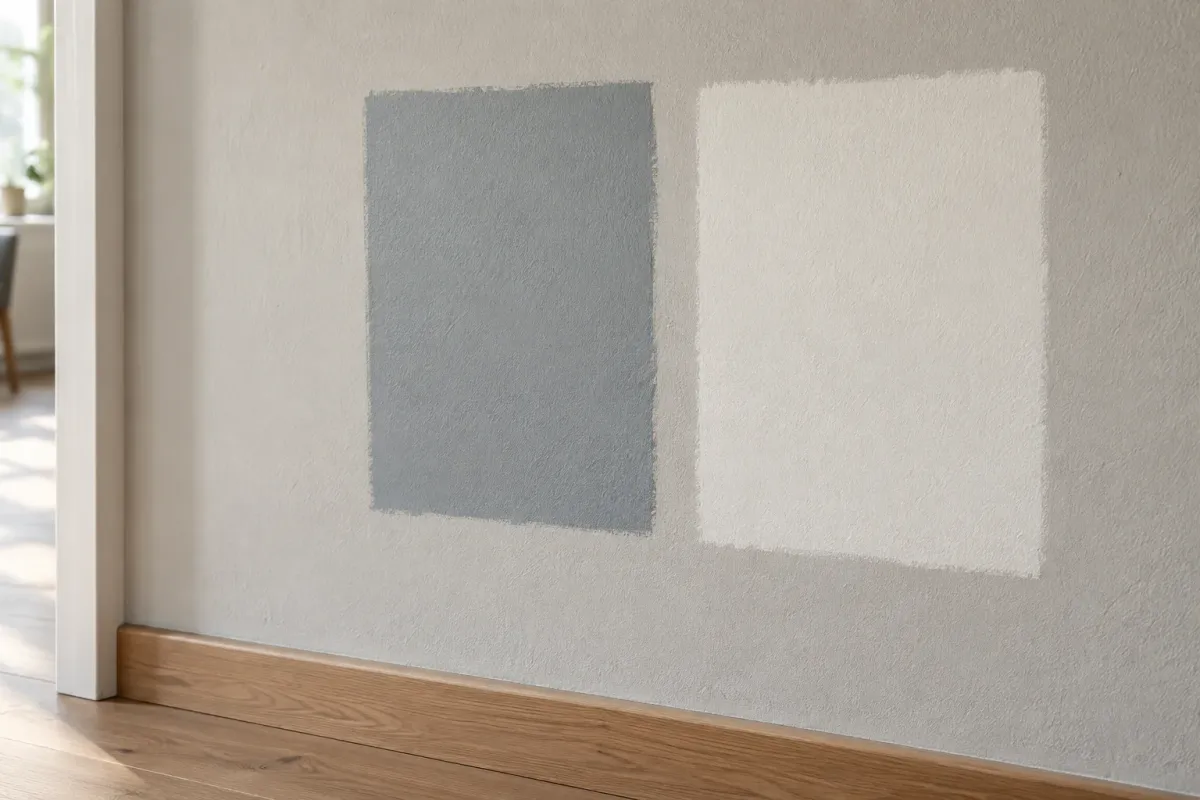
Look at samples in daylight and under the lighting you use in the evening. Compare them with the floor and furniture that will remain. Record the approved reference: “warm white” alone does not identify a colour precisely enough for ordering.
CIN recommends testing colour before application because screens can show differences. The CIN VinylMatt page provides an example of interior paint documentation. This reference does not imply a partnership or make that product compulsory for your project.
5. Ask for a quotation that explains preparation
The proposal should identify:
- Included rooms, walls, ceilings and other elements.
- Agreed protection and furniture movements.
- Proposed preparation and included minor repairs.
- The paint system, colours and finish.
- Measurement rules, exclusions and additional work.
- Phasing, access arrangements and final cleaning.
Floor area gives context but does not measure wall surfaces. When comparing square-metre rates, check which area they refer to. The painting cost guidance helps frame your questions; your project price follows its assessed and agreed scope.
6. Plan the schedule and use of rooms
Agree the sequence of rooms, access to the property and who will approve decisions. Colour changes during work may change the scope, so settle those choices before the start where possible.
Drying, ventilation and reuse of surfaces depend on the applied system and actual conditions. A general indication is not a promise of an immediate return to your normal routine. Ask when you can use each room and how to care for its finish.
7. Review the work room by room
Compare the work against the initial list. Check included elements, colour transitions and cleanliness. Record any points to address with a clear location instead of a general judgement about the whole house.
Keep the final quotation, paint references and care instructions. If the project also includes exterior work, separate the facade painting scope from the interior. You can coordinate the conversations while keeping surfaces, systems and working conditions distinct.
Editorial information to help prepare your decision. The cited sources support technical statements; examples and checklists provide general guidance. The proposed solution and work are confirmed during the building assessment.
What would you like to renew in your home?
Provide the location and describe the problem. An overall view and a detail photograph help prepare the first conversation.
Request an interior painting quote ↗Aveiro · Ílhavo · Vagos · Gafanha da Nazaré. View service areas and assessment arrangements.