
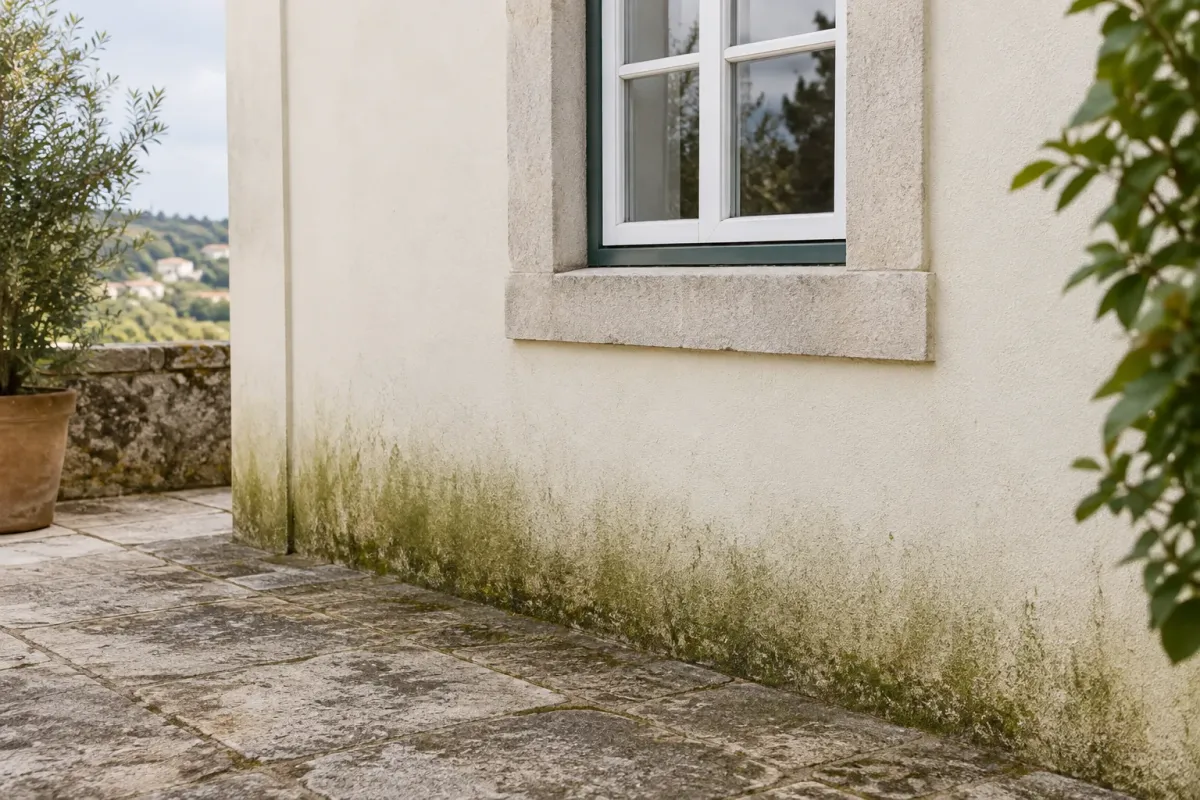
1. Define the result you want
Start with a specific sentence: “remove the green marks at the base”, “clean the wall before painting” or “assess stains that return every year”. These situations may call for different work. An attractive photograph of another house does not define what is achievable on your coating.
At first contact, give Vagos, Ílhavo, Aveiro or the exact town, then the building type: house, apartment building or commercial property. Availability and access arrangements are confirmed for the building. The facade cleaning service page explains the scope and how to prepare for an assessment.
Prepare the cleaning and the facade protections
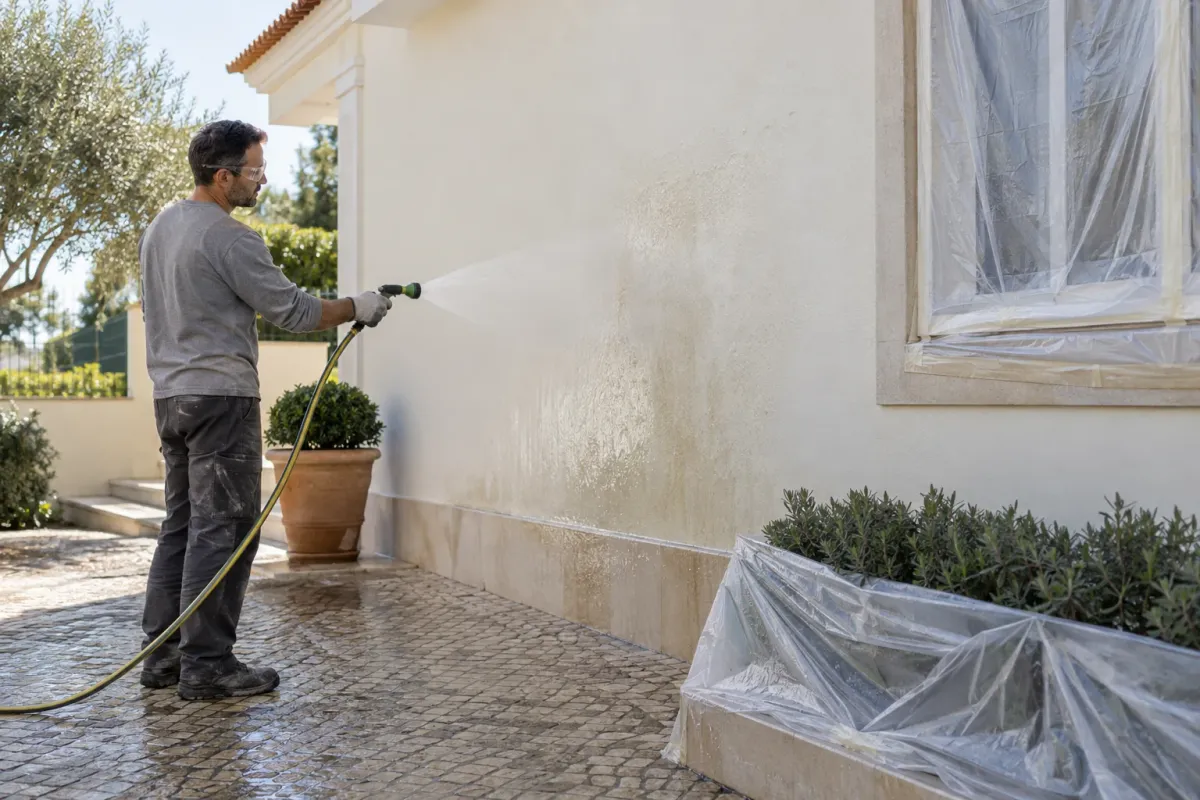
The photograph shows a cleaning lance, a protected window and protective sheets around the nearby areas. These elements connect washing with its preparation: check the coating, protect adjacent surfaces and plan how the wash water will be managed.
How to approach this situation
- Identify the surface and vulnerable areas, distinguishing dirt from material loss or defects needing separate assessment.
- Define a compatible method, protection and management of water from the work. Plan a discreet trial before treating the whole area.
- Assess the dried trial for surface condition, reduction of marks and changes in appearance. Adapt or stop the method if the surface reacts badly.
What determines the decision
Agree on the expected result: removing deposits does not repair a crack or necessarily create the appearance of new paint.
What to check at the end
Examine the facade once dry, document the method and identify points to monitor. Keep comparable photographs to help plan future maintenance.
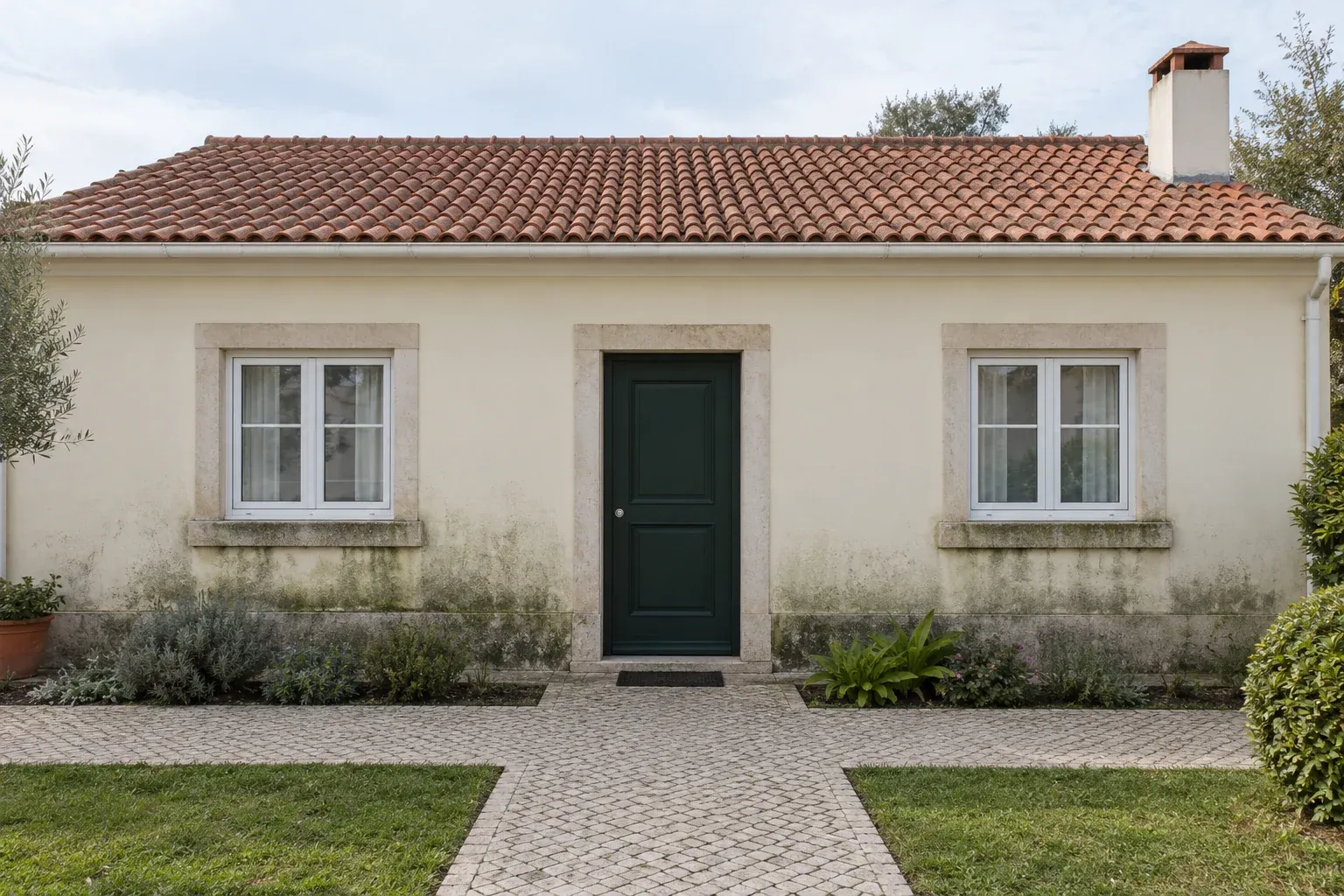
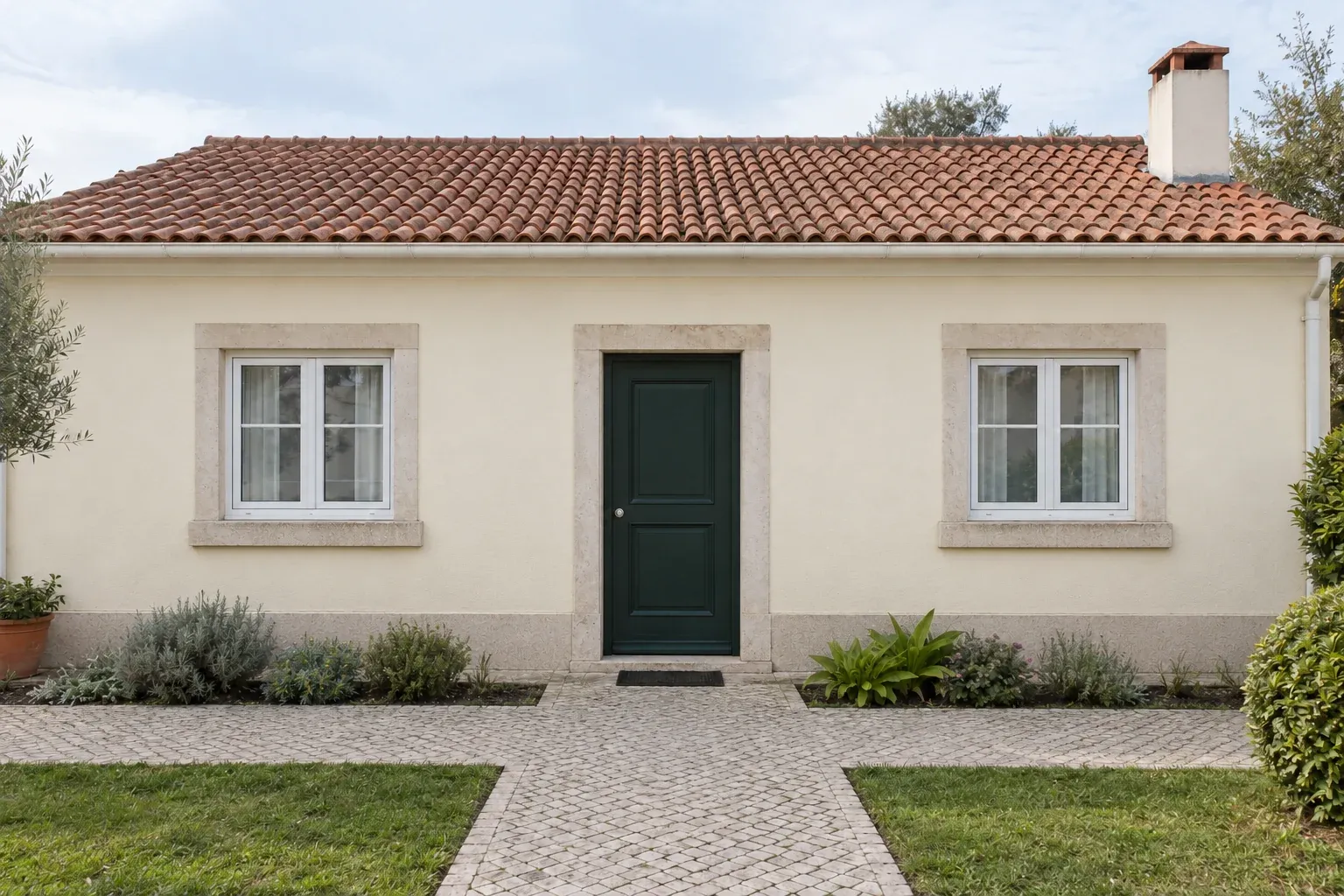
The same facade. A cleaner appearance.
2. Gather information about the wall and access
Keep the last painting quotation, product references or capoto documentation where available. If the coating is unknown, say so. A photograph can prepare a visit but cannot, on its own, confirm the surface composition.
Identify terraces, gardens, equipment, cables, windows and circulation areas. You do not need to select scaffolding or machinery: the contractor should define suitable access. Describe the constraints, water access and any building management rules.
3. Request a trial with an acceptance criterion
Agree where the trial will take place, which adjacent area will remain untreated for comparison and when the result will be examined. Compare surfaces under similar conditions; a wet wall may look different from a dry one.
The useful question is “does this method remove the deposit without damaging this finish?”. Asking only for more pressure does not specify a suitable method. Products for plant growth have defined uses; Weber’s product documentation provides one example. Selection and use must suit the surface and follow the product instructions.
4. Agree protection and work arrangements
Identify window frames, paving, plants and equipment to protect. Confirm how the work area is kept clear, how water and residues are managed and who undertakes final cleaning. Do not assume an existing drain permits any discharge.
Tell the contractor about external insulation before cleaning. APFAC provides ETICS system documentation that helps identify the components. Maintenance still depends on the installed system and its actual condition.
5. Compare quotations for the same scope
A useful proposal lets you answer these questions:
- Which elevations and surfaces are included? Are boundary walls, balconies and paving separate?
- Is the purpose maintenance or preparation for painting?
- Are the method, trial and access arrangements described?
- Who handles protection and water from the work?
- Which marks may remain, and what problems are outside the service?
- How would any additional work be authorised?
If one quote includes painting and another only washing, the totals are not directly comparable. Use the guide to comparing painting quotations when renewal of the finish is also part of the project.
6. Keep a record of the result and follow-up
Record the date, the method used and views matching the initial photographs. Note remaining marks and agreed follow-up. A visual improvement does not prove that the cause of water ingress has been corrected.
The facade inspection and maintenance guide helps organise the record. If the objective changes to repainting, request a separate facade painting quotation that identifies preparation and finish.
Editorial information to help prepare your decision. The cited sources support technical statements; examples and checklists provide general guidance. The proposed solution and work are confirmed during the building assessment.
What would you like to renew in your home?
Provide the location and describe the problem. An overall view and a detail photograph help prepare the first conversation.
Request a facade cleaning quote ↗Aveiro · Ílhavo · Vagos · Gafanha da Nazaré. View service areas and assessment arrangements.