
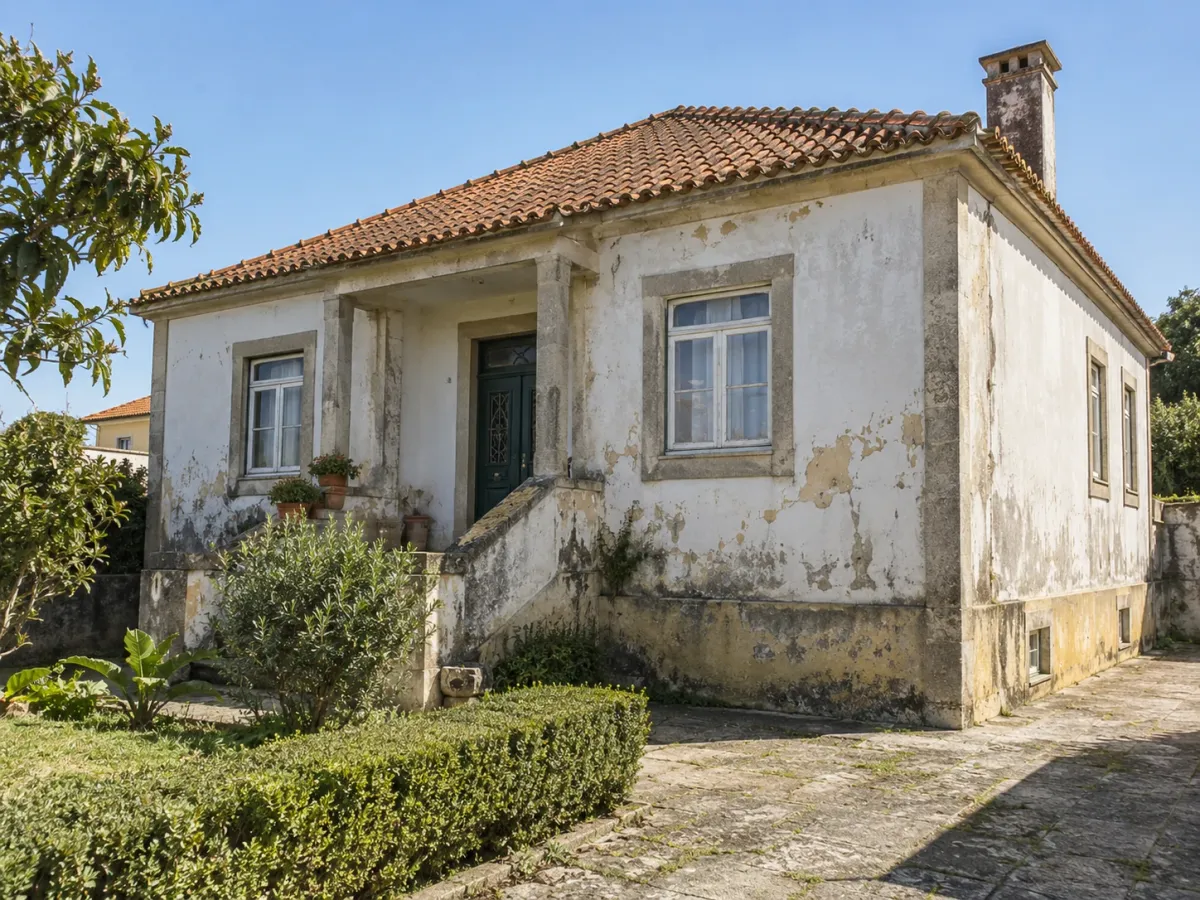
1. Define the reason and intended result
Start with one sentence explaining the enquiry: changing colour, addressing a damaged coating or understanding recurring stains. If there are several objectives, prioritise them. This helps the proposal address more than the most visible symptom.
Name the surfaces to include: main elevation, rear, sides, boundary walls and outbuildings. Floor area is not the area to paint. An estimate clearly identified as approximate is enough for the first conversation.
Prepare a folder of photographs and documentation from earlier work, where available. In Aveiro, Ílhavo, Vagos or Gafanha da Nazaré, the address helps arrange the visit; the municipality alone cannot establish a wall’s condition.
Start with areas where the coating is coming loose
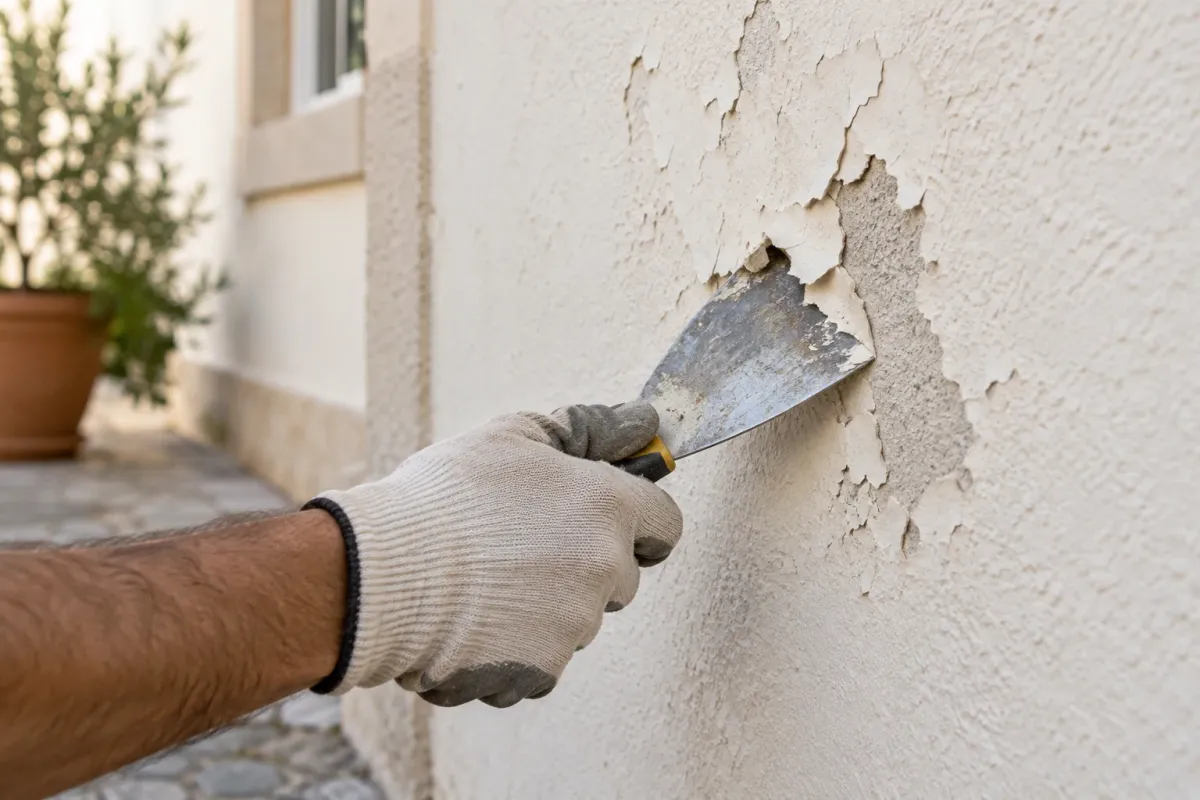
The scraper is positioned beneath an edge of peeling paint. This detail brings preparation into focus: identify loose areas, assess the substrate and specify repairs before choosing the finish.
How to approach this situation
- Have defects mapped by elevation: loose coating, old repairs, cracks and signs of moisture. Define access and protection.
- Allow for compatible repairs confirmed after surface assessment. If an active cause is suspected, address it before finalising the painting programme.
- Select and record preparation, any primer, finish and colour. Plan application around the surface, products and weather.
What determines the decision
The quotation should explain the steps from the existing surface to the proposed finish. Specialist work outside the scope must be clearly distinguished.
What to check at the end
At handover, review appearance, junctions and cleanliness. Keep product references and photographs taken from matching viewpoints to monitor the facade’s condition.
2. Separate observation from diagnosis
Record what you see: loose paint, cracks, streaks, stains and old repairs. Add when you noticed each sign and any changes after rain or building work. A cause that has not been assessed should remain a possibility.
Use this framework to prepare your enquiry:
- Changed appearance without other known signs: request coating and preparation assessment.
- Peeling paint or patches: distinguish substrate types and preliminary work.
- Water or recurring stains: establish the source before choosing a finish.
- Changing cracks or unstable material: obtain competent assessment and address safety before painting.
This framework organises questions. It does not automatically classify a defect’s severity.
3. Ask for a clear technical sequence
The proposal should explain the steps between the existing wall and the final finish. Cleaning, removing unsuitable material, repairs, levelling, any primer and painting should be distinguished rather than hidden in a single description.
SikaRep-111, for example, documents repair and levelling before painting. Its existence does not mean it should be used everywhere; it illustrates why preparation and finishing are separate stages. Sika — SikaRep-111.
Ask the contractor to connect every stage with an observed condition. Where the extent of a repair can only be confirmed during preparation, agree how it will be measured and approved. Conditional work should be explicit rather than a surprise at completion.
| Stage | Question to resolve | Record to keep |
|---|---|---|
| Survey | Which surfaces and defects? | Photos and work schedule |
| Preparation | What is removed, repaired or levelled? | Description and proposed extent |
| System | Which products and compatibility checks? | References and documentation |
| Execution | When can the next stage proceed? | Programme and approved changes |
| Handover | Does the result match the scope? | Checks and maintenance guidance |
4. Choose the finish within the system
Request the product, texture and colour reference. Confirm the primer’s purpose where included. ThermoCoat-5 ES TI documentation, for example, associates uses with specified substrates and systems. Do not assume every primer suits every finish. Sika — ThermoCoat-5 ES TI.
Where appearance is important, agree an identified sample. Written approval avoids confusion between screen colours and the finished product. Keep the sample or its record and state which elements it applies to.
Do not change colour or products during the work without checking the consequences for the system, scope and programme. A visual decision may need technical clarification before implementation.
5. Organise access, protection and timing
Identify spaces that will remain in use, elements requiring protection and responsibility for any removal. Ask how occupants will circulate and how date changes will be communicated.
The programme should separate preparation, repairs, application and final cleaning. Follow conditions and waiting periods for the products actually chosen. The owner’s preferred date cannot replace those requirements.
Agree a process for extras: observation, explanation, supplementary proposal and approval before execution. This reduces disagreement when preparation exposes conditions that were not visible during the visit.
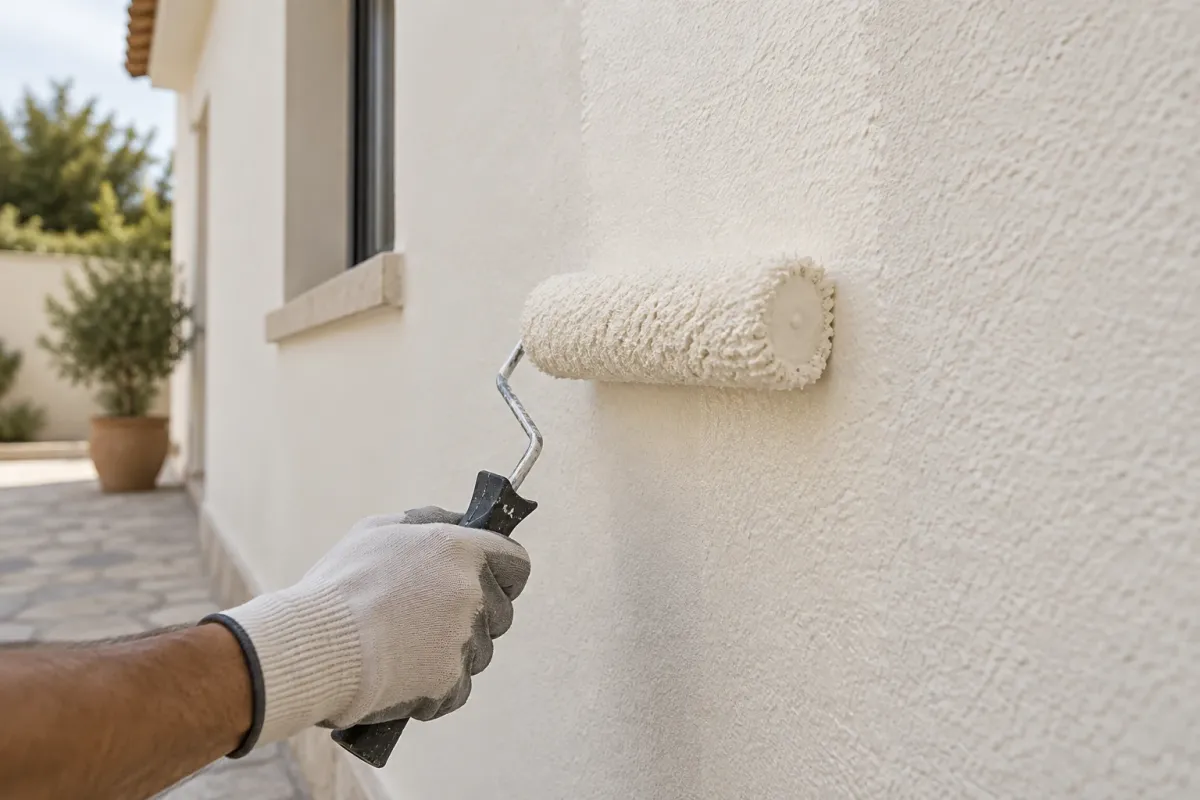
6. Receive the work and prepare maintenance
At handover, revisit the list of surfaces and compare it with the agreed scope. Locate questions and correction points precisely. A distant overall impression is not a substitute for this check.
Request applied product references, approved changes and corresponding maintenance instructions. Keep final photographs from similar viewpoints to the initial ones. They do not prove future durability but provide a useful reference for changes.
Owner’s final checklist: written scope, assessment questions resolved, identified products, approved colour, agreed access, documented changes and maintenance records supplied.
Use the quotation comparison guide to review competing proposals. The facade painting service helps prepare an assessment of your property.
The facade inspection and maintenance guide helps organise records after handover.
Editorial information to help prepare your decision. The cited sources support technical statements; examples and checklists provide general guidance. The proposed solution and work are confirmed during the building assessment.
What would you like to renew in your home?
Provide the location and describe the problem. An overall view and a detail photograph help prepare the first conversation.
Request a facade assessment ↗Aveiro · Ílhavo · Vagos · Gafanha da Nazaré. View service areas and assessment arrangements.